Refer a Friend - Earn $200

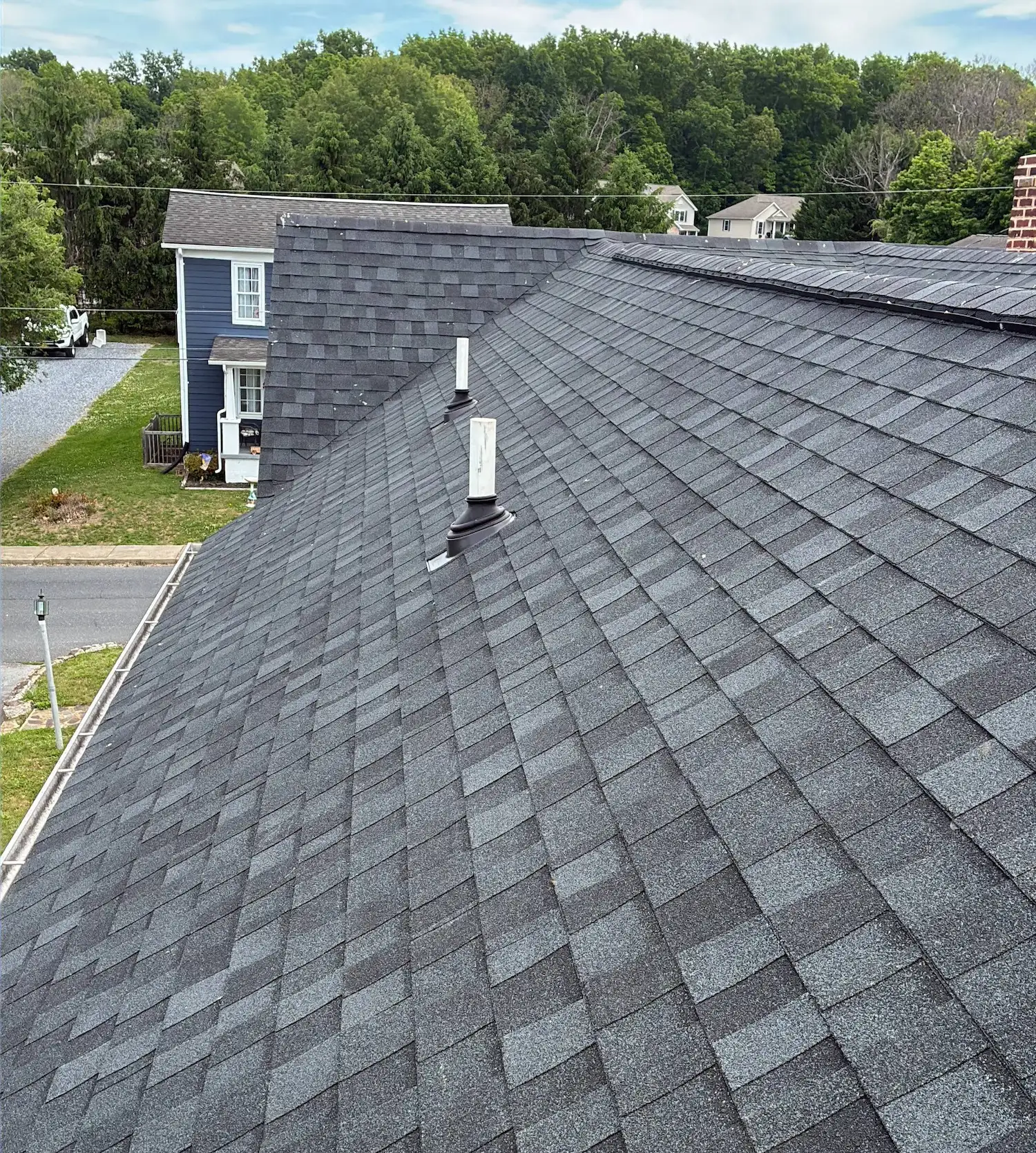
Roofs almost never fail all at once. They give you small warnings for years — a curling shingle, a granule pile in the gutter, a stain on the ceiling — and then, eventually, one warning that isn't subtle anymore. For one Altoona-area homeowner this spring, it was the wind. Shingles started lifting and tearing off in storms that wouldn't have touched a healthier roof. When our Altoona roofing team got out to look, the verdict was straightforward: this is the wind telling you the roof is done.
Architectural shingles are rated for serious wind speeds when they're new — sometimes 110 mph or more. That rating is what they can take on day one. By year 25 or 30, that number has dropped meaningfully: the sealant strip that bonds each shingle to the one below has weakened, the shingle itself has lost flexibility, and the nails may have started to loosen. The wind that used to do nothing now lifts the front edge of a shingle and the sealant can't grab it back. Once one shingle goes, the next one is exposed, and the failures start to chain.
This home's original roof went on in 1992 — 34 years ago. By that age, the shingles were well past the point where their wind-resistance rating still meant anything. The right read on "shingles blowing off" in that situation isn't to put a couple of replacements down and hope for the best. It's a sign the whole system has reached the end of its useful life. A full shingle roof replacement is the only honest fix.
One thing worth pulling out: the property has a shed, and the homeowner included it in the same scope as the house. This is the right move and we wish more homeowners made it. The shed roof is typically the same age as the house roof, so it's failing on the same timeline. Mobilizing the crew, the dumpster, and the materials is a fixed cost that scales well across multiple structures — doing the shed alongside the house is dramatically cheaper than coming back for it as a standalone job in two or three years when it inevitably starts leaking. The shed got the same Gold-tier specification as the house: full tear-off, ice and water shield at the eaves and penetrations, synthetic underlayment, new metal drip edge.
The interesting ventilation note on this job: the original house and the addition got different exhaust strategies, because they needed different things. The addition's ridge was long enough to get a proper continuous ridge vent. The main house's geometry didn't support that, so we took a different route: we removed the old turbine vents, decked over the openings, and installed a solar-powered attic fan in their place. A solar fan is electric ventilation without the electrician — no wiring required, no separate trade to coordinate, and it runs on a small built-in solar panel that operates exactly when you need it most (the hot, sunny days when the attic needs to vent). This is the right kind of detail to think through: not every roof has the same ventilation needs, and the honest answer is sometimes a mix of solutions.
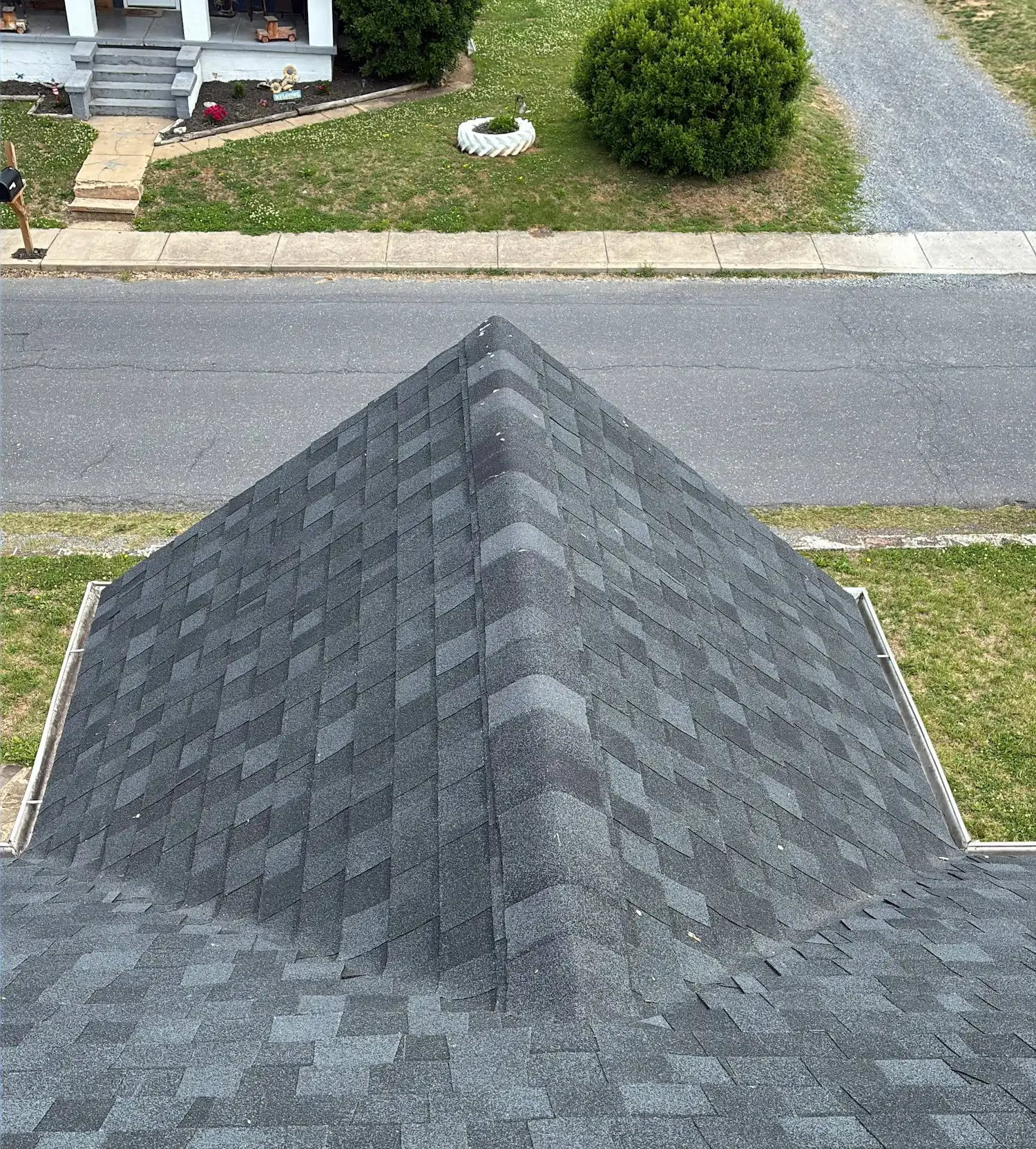
The back of the house has a transition facet with a lower pitch than the rest of the roof. On lower-pitched sections, water doesn't shed as quickly, and the shingle manufacturer requires additional waterproofing to keep its warranty intact. So instead of the standard ice-and-water-shield-at-eaves-and-valleys approach, the entire back transition facet got ice and water shield wall-to-wall — 100% coverage under the shingles. It's a quiet detail that exists because the slope demanded it, and it's the kind of thing that protects the homeowner's coverage for the next quarter-century.
The specification for this Altoona-area two-story plus shed replacement:
The house and the shed were both done under the Cenguard Gold package, which covers both workmanship and material defects. Doing the structures together means the same warranty covers both, the same crew handles both, and the homeowner gets a single coordinated invoice rather than two separate visits years apart. Homeowners who want to compare tier-by-tier coverage can also look at our breakdown of Silver, Gold, and Platinum options for the trade-offs.
If your roof is past 20 years and you're starting to see lifted or missing shingles after storms, it's worth getting a real look at it before the next one. Every Cenvar replacement comes with $0 down and no payment until the job is complete, plus our 100% satisfaction guarantee, with Service Finance financing available through a third-party lender. Our Altoona team is happy to walk the whole property — house, shed, garage, whatever you've got — and tell you which roofs need to come off now and which can wait. Request a free roofing estimate and we'll be straight with you.

.svg)