Refer a Friend - Earn $200

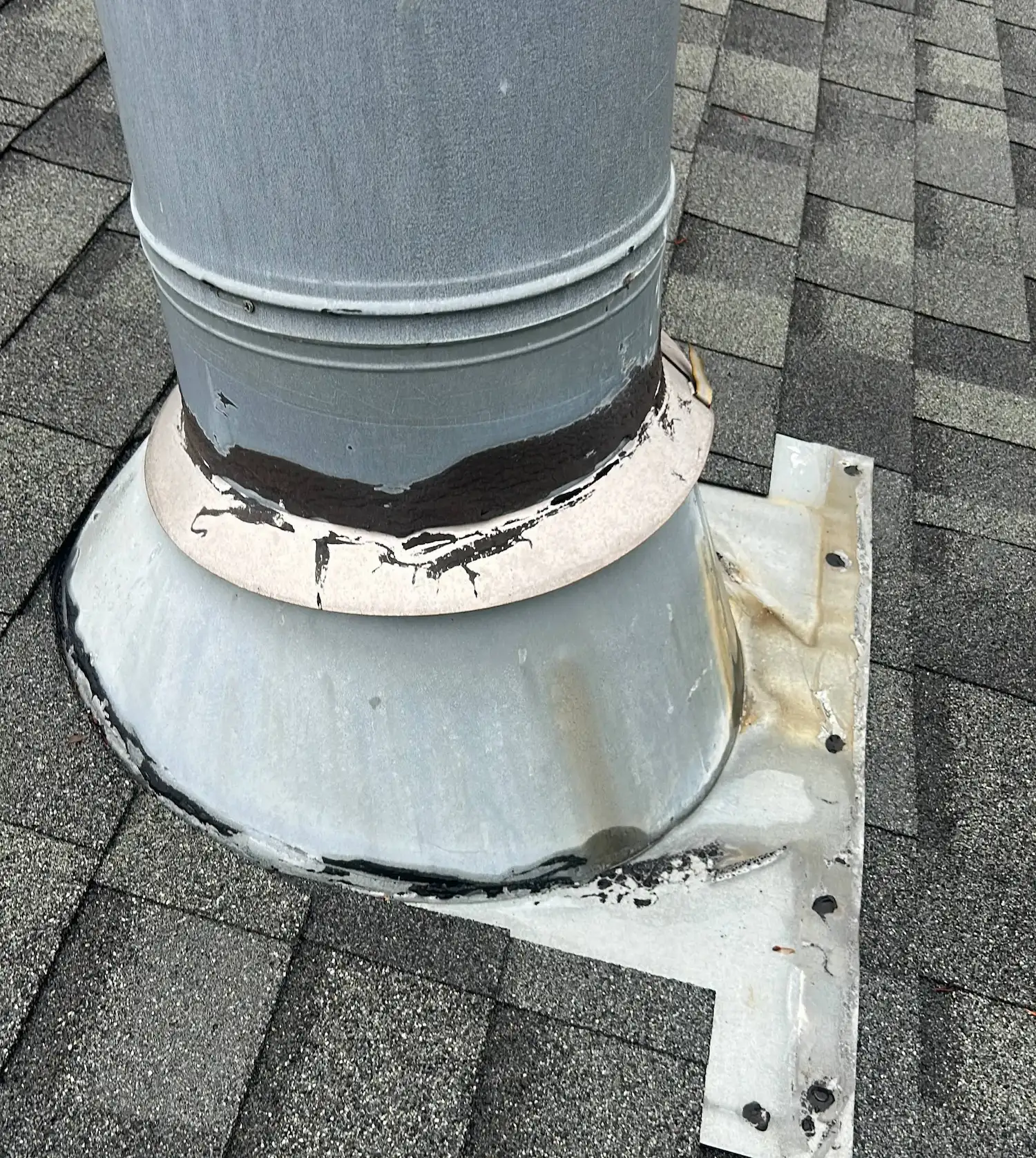
One of the most common service calls our Culpeper roofing team fields each year sounds alarming at first: "There's water collecting on my skylight — I think my roof is leaking." It's an understandable worry. Water anywhere near a roof penetration sets off alarm bells. But a surprising share of these calls across Culpeper County and the surrounding Piedmont turn out to be something very different from a leak — and knowing the difference can save a homeowner an unnecessary repair bill. Here's how we approach the diagnosis.
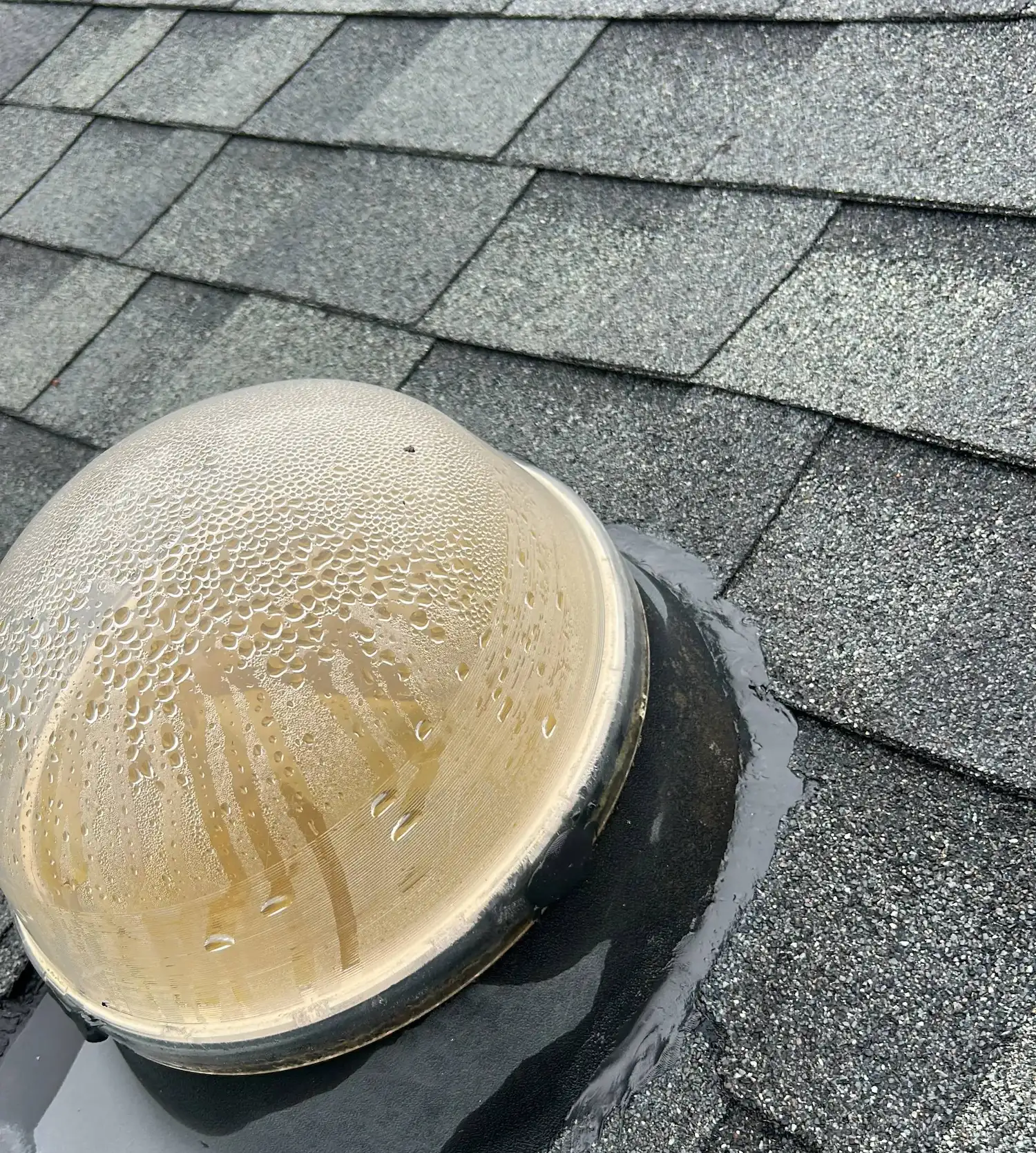
The single most useful question we ask is where the moisture is showing up. On a domed acrylic skylight — the bubble style common on bathrooms and hallways in homes built across the region — condensation forms on the underside of the dome, on the inside. You'll see fine beads of water, sometimes with a faint yellowish tint, clinging to the interior of the bubble, heaviest in the early morning. A genuine leak behaves differently: it tracks down from the frame, stains the drywall around the skylight shaft, and shows up after rain rather than after a hot shower.
That distinction matters because the two problems have completely different causes and completely different fixes. Treating a condensation problem like a leak — slathering more sealant around a penetration that isn't actually failing — is one of the most common mistakes we see from well-meaning homeowners and less-careful contractors alike.
Bathrooms are humidity factories. A single hot shower can push indoor humidity well past 80%. When that warm, moisture-laden air rises and hits the cooler surface of a skylight dome — especially a single-layer acrylic bubble on a cool morning — the moisture condenses out of the air and onto the surface, exactly the way a cold drink sweats on a summer day. The skylight isn't letting water in; the room's own air is depositing water on it.
This is overwhelmingly a ventilation and humidity-control issue. The usual contributors are a bathroom exhaust fan that's underpowered, vented into the attic instead of outside, or simply not run long enough after a shower. In homes across Madison, Orange, and Rappahannock counties — many with original mid-2000s construction — we frequently find bath fans that were never ducted properly to begin with.
When our team responds to a sweating-skylight call, the assessment follows a consistent path. We confirm the moisture location, check the surrounding decking and drywall for any actual water tracking, and inspect the skylight's perimeter seal and flashing to rule out a true penetration failure. Only after the roof side checks out clean do we turn to the humidity side. A typical resolution looks like this:
That last point is the one we care about most. If the roof is sound, we tell you the roof is sound — even when that means the work falls outside what a roofing crew bills for.
Sometimes the diagnosis goes the other way, and the skylight really is the problem — a cracked dome, a failed perimeter seal, or aging flashing that's finally given up. Older acrylic bubbles in particular grow brittle and craze with decades of UV exposure. In those cases, the right move is usually replacement rather than another bead of caulk, and modern units are a dramatic upgrade. We frequently install Velux skylights, which now ship with a solar-powered room-darkening shade as standard, and we coordinate skylight work as part of a broader shingle roof replacement when the timing lines up. If the dome is sound but the roof around it is aging, a professional roof inspection is the right first step to scope what actually needs attention.
The reason we lead with diagnosis instead of a sales pitch comes back to our "Ethical. Expert. Engaged." promise. A sweating skylight is a perfect test of it — the easy move is to sell a repair the homeowner doesn't need. The right move is to explain what's actually happening and recommend the smallest fix that solves it. That's the standard our Virginia roofing teams hold across every service area.
If you've noticed water on a skylight, a stain near a roof penetration, or you're just not sure whether what you're seeing is a leak or condensation, our Culpeper team is glad to take a look and tell you straight. Schedule a free roofing estimate and we'll give you an honest diagnosis — no pressure, no upsell.

.svg)