Refer a Friend - Earn $200

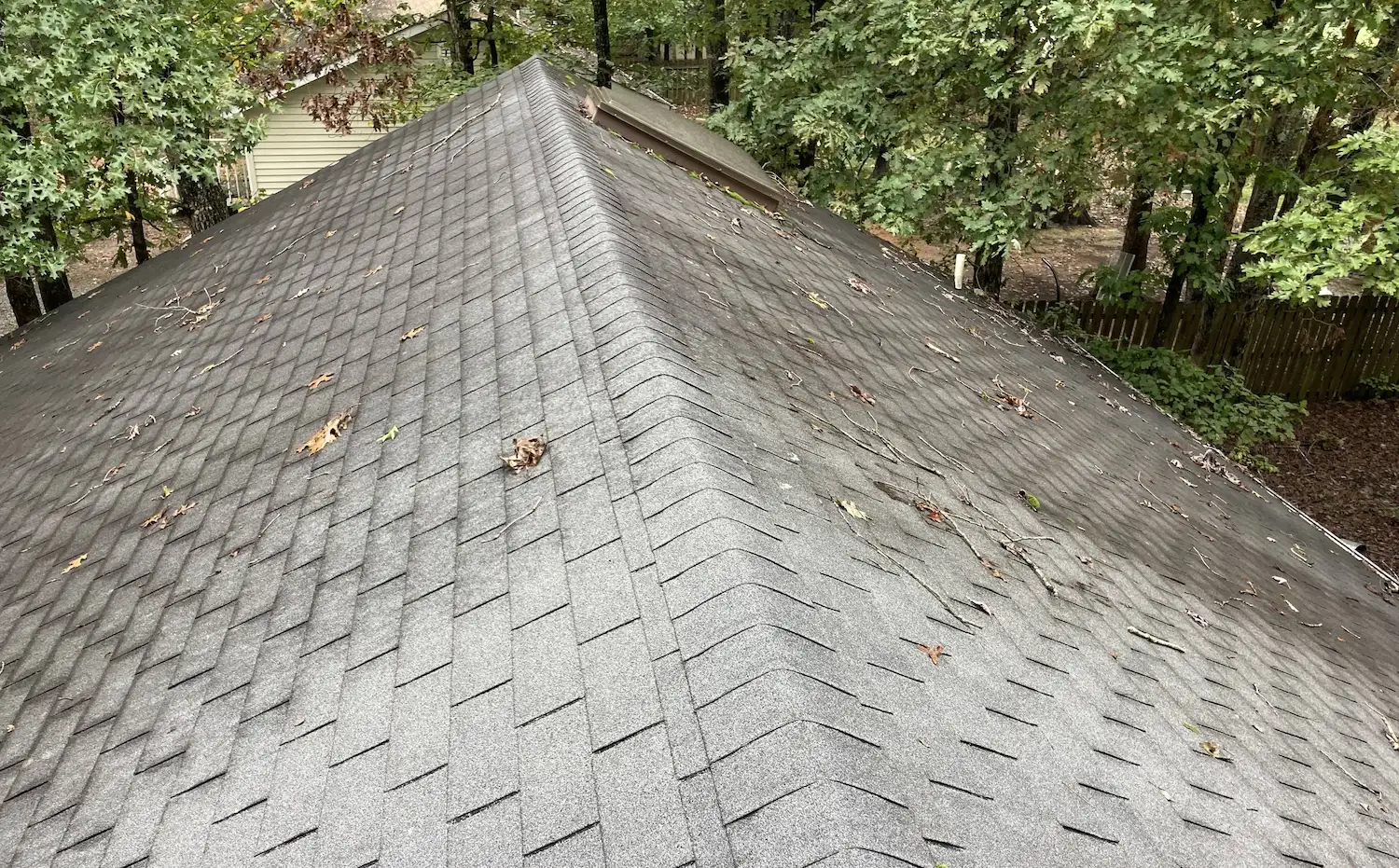
Some of the most important conversations our Culpeper roofing team has with homeowners happen before a single shingle comes off. One of those conversations involves a roofing detail most homeowners have never thought about: how a chimney wrapped in faux-stone veneer is flashed — and what happens to that flashing during a full roof replacement. It's the kind of thing a less scrupulous contractor stays quiet about until there's a problem. We'd rather lay it out in plain language at the proposal stage. Here's why, using a full-replacement scenario we see regularly on aging homes across Culpeper County and the surrounding Piedmont.
A common project for us is an original 1990s-era roof finally reaching the end of its service life — typically a builder-grade three-tab system, now thirty-plus years old, with a small leak that signals the whole roof is ready for replacement rather than another patch. The fix is a clean tear-off down to the deck and a new architectural shingle system. We frequently install Tamko Titan XT architectural shingles for these — a heavier, more wind-resistant, more attractive upgrade over the original three-tabs, and a meaningful jump in curb appeal and durability.
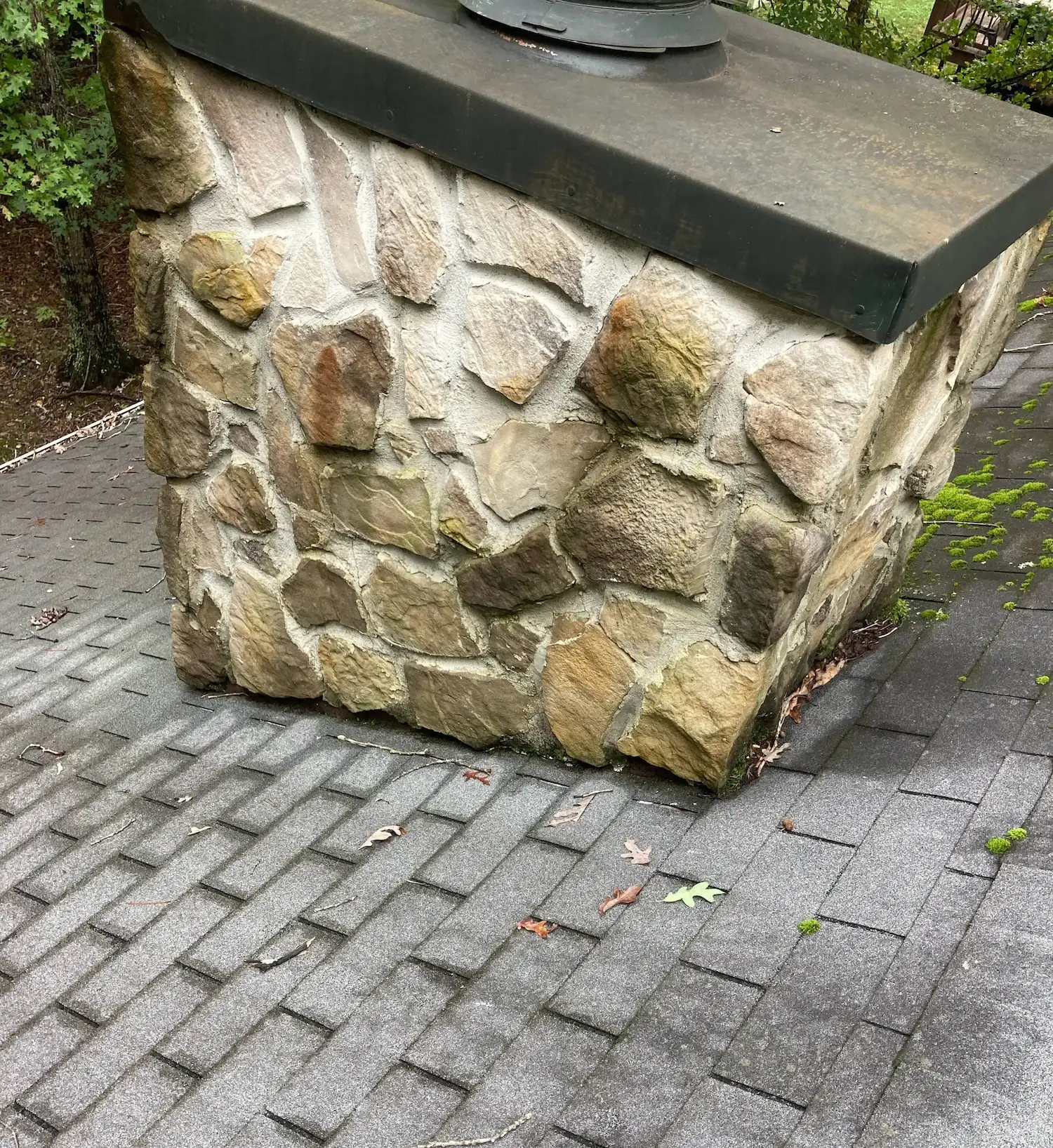
On a straightforward roof, that's a one-day job. But many of these homes have a feature that complicates the picture: a chimney clad in faux-stone (manufactured stone veneer), a popular architectural choice in Piedmont construction from that era.
On a standard brick chimney, the counter-flashing is tucked into a mortar joint and can be removed and replaced cleanly during a reroof. On a faux-stone chimney, the original flashing is often permanently cemented behind the stone veneer when the home was built. The stone was applied over the flashing, locking it in place. That creates a genuine dilemma during tear-off: the crew will do everything possible to preserve the existing flashing, but because it's trapped behind the stone, there's a real chance it gets damaged when the surrounding roofing is removed — and there's no way to know for certain until the work is underway.
This is exactly the kind of uncertainty a homeowner deserves to understand before signing, not discover afterward.
Our approach to this situation is written directly into the proposal, in plain terms. Here's the commitment we make:
We also strongly recommend repointing and sealing the entire chimney with masonry sealant once any stone has been replaced — a small step that prevents the saturated-masonry leaks that even sound stonework can develop over years of weather exposure.
The easy path in this industry is to quote the job, stay silent about the chimney risk, and deal with the awkward conversation only if the flashing breaks. We think that's backwards. A homeowner making a multi-thousand-dollar decision deserves the full picture, including the parts that are inconvenient for us to explain. That's the core of our "Ethical. Expert. Engaged." promise — the same reason our proposals spell out structural-repair rates upfront (replacement decking is handled at a clear per-sheet rate) and offer $0-down financing through Service Finance so cost is never a surprise either.
It's also why our shingle roof replacements start with a genuine roof inspection rather than a sales pitch. When we look at your roof, you get a straight assessment of what it needs and what it'll take.
If you've got an aging roof — especially a 1990s-era home with a stone or faux-stone chimney — our Culpeper team is glad to take a look and walk you through every detail before you commit to anything. Schedule a free roofing estimate and we'll give you the honest version: what's involved, what could go sideways, and exactly how we'd handle it. No pressure, no surprises.


.svg)